The question sounds simple: should your business use digital or paper loyalty cards in 2026? But the answer shapes everything from how often customers return to whether you can see your loyalty program working at all. This guide compares both honestly and shows where each fits.
The Case Paper Loyalty Cards Once Made
Paper stamp cards earned their place for good reasons. They cost almost nothing to print. Customers understand them instantly — collect ten stamps, get one free. There is no setup, no login, no technology to fail. For decades, the punch card by the register was the default loyalty program for cafes, bakeries, salons, and corner shops.
That simplicity is real, and it is why paper has not disappeared. But the same simplicity that makes paper easy also makes it blind.
Where Paper Falls Short
A paper card tells you nothing. Once it leaves your counter, you have no idea who holds it, how often they visit, or whether they are about to stop coming. You cannot reach the customer between visits. You cannot tell a loyal regular from a one-time tourist.
Paper cards get lost, washed in pockets, and left at home. Customers forget to bring them and lose their progress, which quietly kills motivation. And paper is easy to abuse — a stamp is just an ink mark, simple to forge or duplicate.
Across multiple locations the problems multiply. A stamp earned at one shop means nothing at another. There is no shared view, no unified customer, no way to grow loyalty as you grow your business.
What Digital Loyalty Cards Change
A digital loyalty card lives on the customer's phone and in your dashboard at the same time. Every time it is used, you learn something: visit frequency, spending patterns, and the early signs of a customer drifting away.
That data is the difference between hoping customers come back and knowing why they do. With a digital program you can segment customers, send a targeted offer to the ones who have gone quiet, and measure whether it worked.
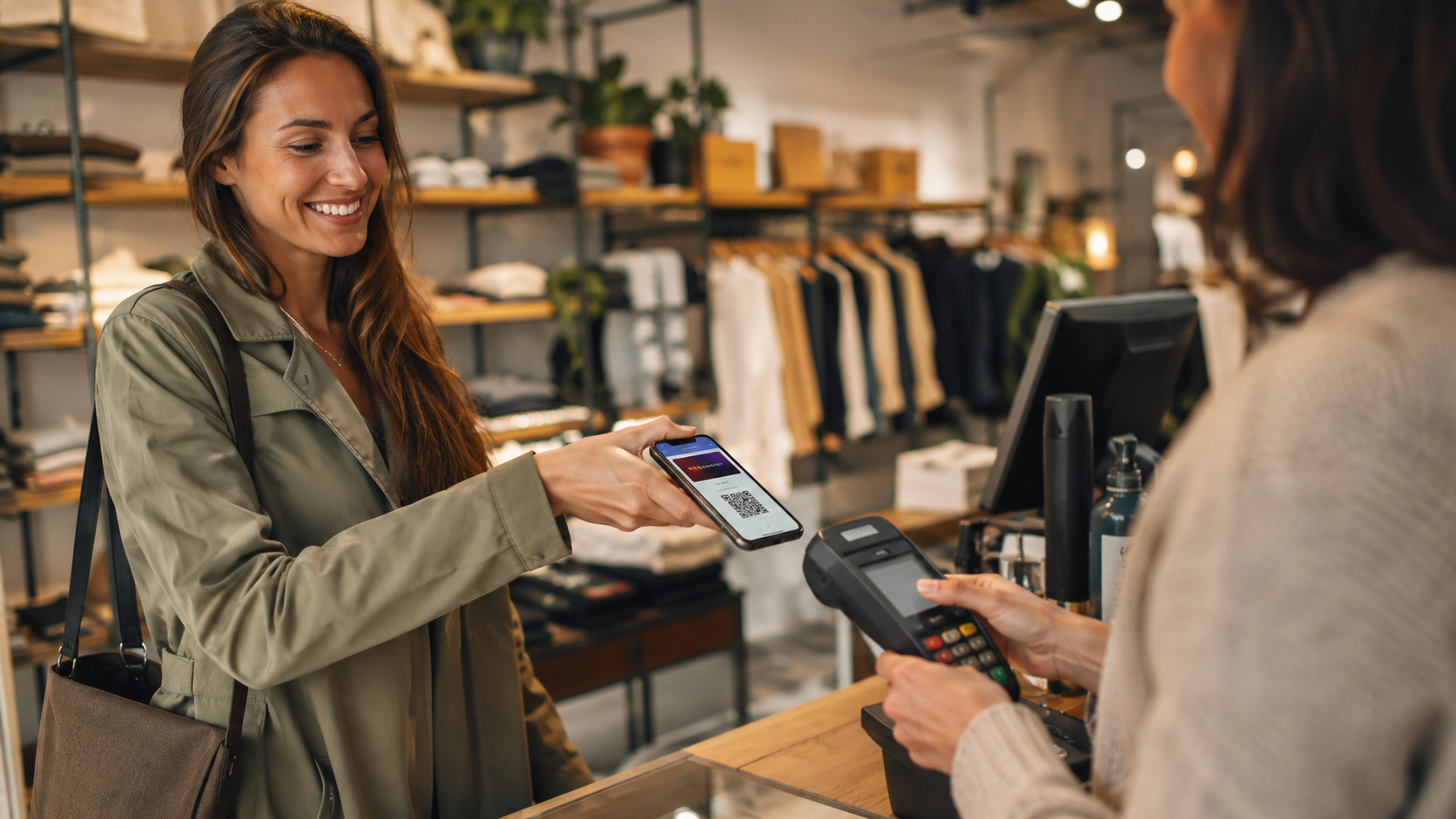
Digital cards also remove the friction that kills paper programs. With BonusCard, customers do not need to download an app to start earning — a simple scan is enough. Nothing to lose, nothing to forget, nothing to forge.
Digital vs Paper: Side by Side
| Factor | Paper Cards | Digital Loyalty Cards (BonusCard) |
|--------|-------------|-----------------------------------|
| Setup cost | Very low (printing) | Free tier available |
| Customer data | None | Visit and spend history |
| Reaching customers between visits | Not possible | SMS campaigns, automated offers |
| Lost or forgotten cards | Common, kills progress | Card lives on the phone |
| Fraud risk | High (easy to forge) | Low (scan-verified) |
| Segmentation | Impossible | Automatic |
| Multi-location | Each store separate | One unified view |
| Analytics | None | Retention and campaign analytics |
| Greek AADE receipt integration | None | Included |
Does Digital Mean Complicated? No.
The biggest fear about going digital is that it will be hard — for you or for your customers. It does not have to be. The friction in early digital loyalty came from forcing app downloads and complex logins. BonusCard removes that: customers start with a scan, and you manage everything from a single dashboard on the device you already use.
The free Starter plan lets you run a real digital program at no cost for up to 100 customers and one location. You can try it alongside your existing paper cards and switch fully once you see the retention numbers.
When Paper Still Makes Sense
Honesty matters: paper is not always wrong. If you run a tiny operation, expect to stay single-location, and have no interest in customer data or campaigns, a punch card may be all you need. There is no shame in simple.
But if you want to bring customers back deliberately, understand who your best customers are, or grow beyond one location, paper hits a ceiling fast. That is the moment digital pays for itself.
Which Wins in 2026?
For most growing businesses, digital wins — not because it is newer, but because it is measurable. In 2026, customers expect their loyalty to follow them on their phone, and businesses that can see their loyalty data make better decisions than those flying blind.
The winning move is a low-friction digital program that starts free and grows with you. BonusCard offers exactly that: scan-based digital cards with no customer app, automatic segmentation, retention and campaign analytics, SMS campaigns, multi-location support, and AADE QR integration for the Greek market.
You can set up your store from the tenant login and read more practical loyalty guides on our blog.
Frequently Asked Questions
Are digital loyalty cards better than paper for a small business?
For most businesses, yes. Digital cards give you customer data, let you reach customers between visits, resist fraud, and work across multiple locations — none of which paper can do. Paper only wins for the smallest single-location shops that do not want any data.
Do customers need an app to use a digital loyalty card?
With BonusCard, no. Customers start earning through a simple scan, so there is no app-download barrier that typically reduces sign-ups.
Is switching from paper to digital expensive?
No. BonusCard has a free Starter plan for up to 100 customers and one location, so you can run a digital program at zero cost and switch from paper gradually.
Can I see which customers are about to stop visiting?
Yes. Digital loyalty cards record visit frequency, and BonusCard's retention analytics highlight customers who have gone quiet so you can send a win-back offer before you lose them.
What happens if a customer loses their phone?
Their loyalty record lives in your dashboard, not only on their device, so their progress and history are safe and can be restored — unlike a lost paper card.
Does digital loyalty work for Greek businesses?
Yes. BonusCard includes a multi-language interface and AADE-compatible receipt QR integration built for the Greek market.
The Hidden Cost of "Free" Paper Cards
Paper cards look free, but the real cost is the opportunity you never see. Every paper card is a customer relationship you cannot follow up on. When a regular stops coming, paper gives you no warning and no way to reach out. Over a year, the silent loss of customers you could have won back dwarfs the few cents you saved on printing.
Digital flips that math. The same customer who would have quietly disappeared now triggers a retention alert, receives an automated offer, and comes back. One recovered regular often covers the entire monthly cost of the software many times over.
Building Trust in the Switch
Customers care about two things when loyalty goes digital: that it is easy, and that their data is respected. Keep the first visit frictionless — a scan, not a sign-up form. Be clear about what you do with their information: you use it to reward them and to send offers they actually want, nothing more.
A digital program that respects the customer earns more loyalty than a paper card ever could, because it feels personal. A targeted "we miss you" message lands very differently from a generic discount taped to the door.
A Practical Migration Plan
You do not have to switch overnight. Run digital alongside paper for a month. Issue digital cards to new customers and to regulars who are happy to try it. Keep honoring existing paper cards until they fill up. Watch the dashboard: as digital sign-ups grow and you see your first retention insights, the case for going fully digital makes itself.
By the end of a single quarter, most businesses find the paper cards have quietly retired themselves — not because anyone forced the change, but because the digital version simply works better for everyone.
Final Verdict
Paper loyalty cards are simple and familiar, and for the smallest shops that is enough. But in 2026, digital loyalty cards win on every dimension that drives growth: data, reach, fraud resistance, multi-location support, and measurable retention. With a free starting tier and no app required for customers, going digital no longer means going complicated. BonusCard makes the winning option the easy one.
How Analytics Turn Loyalty Into Strategy
The deepest advantage of digital is that loyalty stops being a guess and becomes a strategy. With paper, you reward visits you happen to witness. With digital analytics, you can answer real questions: Which day of the week brings your best customers? Does a points reward or a free-item reward drive more repeat visits? How many customers came once and never returned, and what would it take to win even ten percent of them back?
BonusCard's campaign and retention analytics put those answers on a single screen. You run a campaign, you see the lift, you keep what works and drop what does not. Over months, that feedback loop compounds into a loyalty program tuned to your specific customers — something no paper card could ever become.
Comparing options? See our detailed BonusQR alternative guide for Greek SMBs to find the right loyalty platform for your business.